 Why KC GlobEd
 GCC School
Overview of US CMA Part 1
Become familiar with the examination and the fundamental areas of financial planning, performance and analytics.
Build Financial Expertise. Develop Analytical Skills.
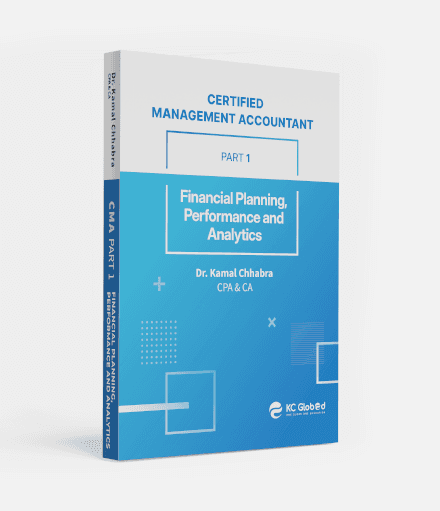
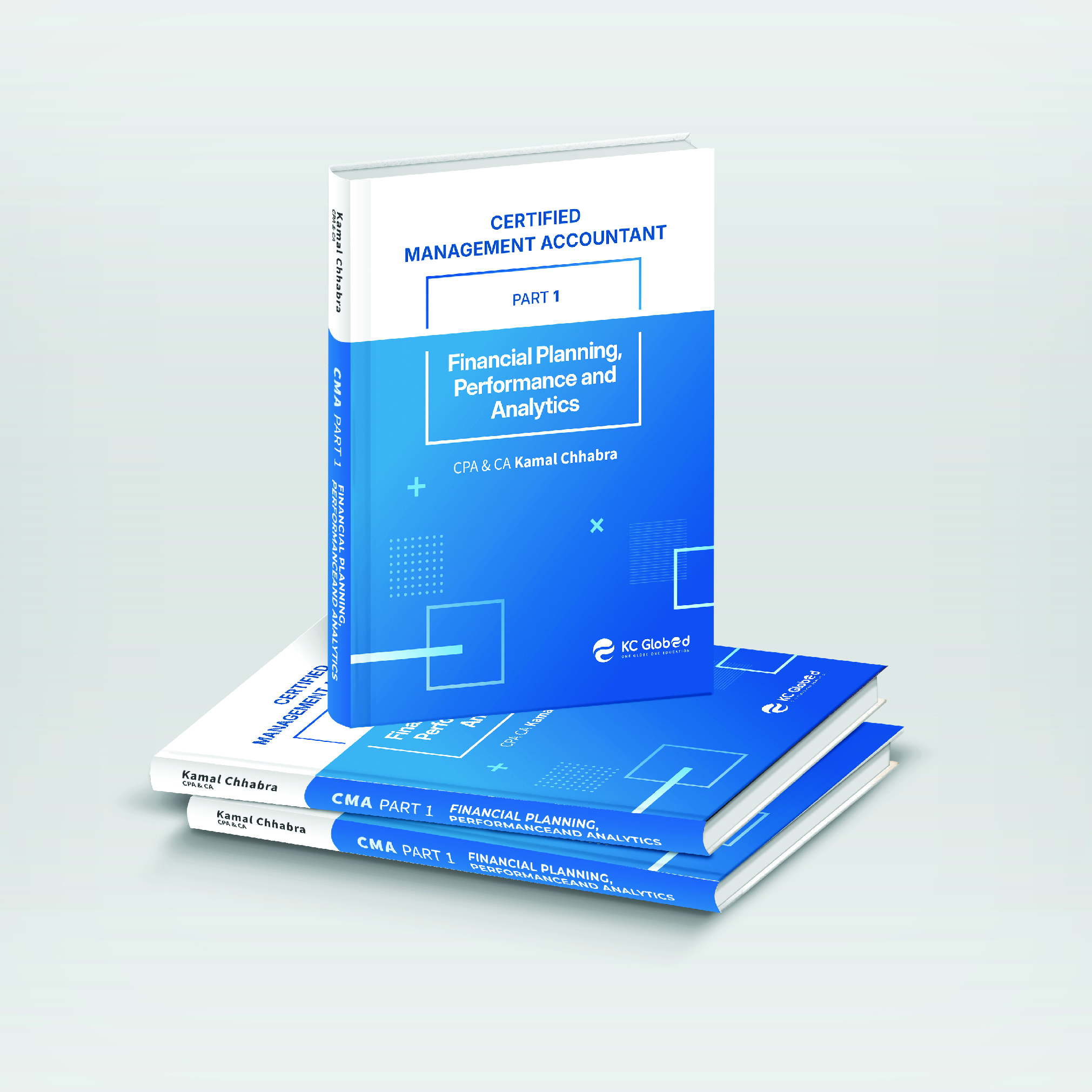
Gain a deeper understanding of financial reporting, business planning, cost management and performance evaluation with KC GlobEd’s US CMA Part 1 book, designed to support focused exam preparation and strengthen managerial accounting knowledge.
About the Book
Go Beyond Accounting Fundamentals. Management accounting involves more than recording financial transactions. It requires the ability to interpret financial information, allocate resources, evaluate business performance and support organisational objectives.
Authored by Dr. Kamal Chhabra, KC GlobEd’s US CMA Part 1 book brings together financial principles, analytical techniques and management accounting methodologies in a systematic format that supports progressive learning.
What's Inside the Book?
From financial statements and strategic planning to organisational performance, the book introduces essential concepts that form the foundation of the US CMA Part 1 examination.
Become familiar with the examination and the fundamental areas of financial planning, performance and analytics.
Study financial statements, asset valuation, liability measurement, revenue recognition and equity transactions, along with key differences between US GAAP and IFRS.
Explore strategic planning, forecasting techniques, budgeting methodologies, annual profit plans and financial projections that support organisational goals.
Examine variance analysis, standard costing, responsibility centres, transfer pricing and contribution margins to assess operational efficiency and financial results.
Develop familiarity with costing methodologies, overhead allocation and cost measurement techniques used to manage business resources and profitability.
Gain insights into corporate governance, risk management, internal control frameworks and measures for safeguarding organisational assets.
Discover the role of information systems, data governance, digital transformation and analytical tools in modern management accounting.
Why This Book?
The CMA examination requires a combination of conceptual knowledge, numerical proficiency and analytical thinking. This study guide connects accounting principles with financial management techniques, helping candidates approach different areas of the syllabus with greater clarity.
Establish a strong foundation in financial reporting, managerial accounting and business planning principles.
Become familiar with financial calculations, forecasting models, costing techniques and variance analysis.
Recognise how accounting information supports budgeting, resource allocation and managerial decision-making.
Identify the distinctions between various costing systems, valuation methods and budgeting approaches.
Develop the ability to interpret financial data, identify performance gaps and assess operational outcomes.
Revisit essential formulas, accounting treatments and examination topics through clearly defined subject areas.
Preparation Journey
Progress from accounting fundamentals to advanced financial techniques, developing the knowledge required to approach management accounting problems.
Build your CMA Part 1 knowledge step by step.
See What's Inside
English | US CMA Part 1 | Study Book
WHO IS THIS BOOK FOR?
An essential learning resource for:

ABOUT THE AUTHOR
US CPA | CA | Founder & CEO, KC GlobEd
Built by KC GlobEd
KC GlobEd is a global finance and professional certification education company supporting learners across international accounting and finance qualifications.
REVIEWS
Straight from reviewers on Amazon.
PRODUCT DETAILS
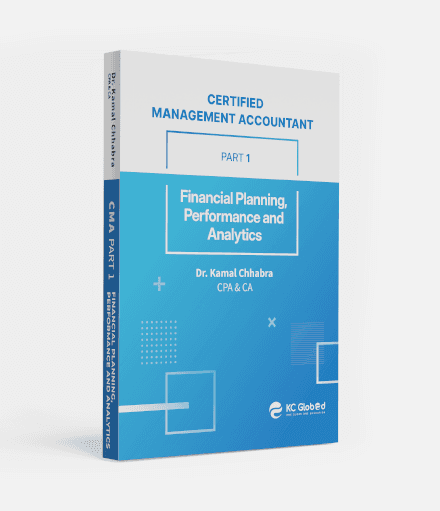
US CMA Part 1 - Paperback
English | ISBN: 978-93-342-4097-9
Continue to the KC GlobEd checkout.
FAQ
US CMA Part 1 focuses on financial planning, performance and analytics, covering the financial and managerial accounting competencies required to support business operations.
The book addresses external financial reporting, planning and forecasting, performance management, cost management, internal controls, technology and analytics.
Yes. Its structured presentation allows candidates to begin with fundamental accounting principles before progressing towards more advanced financial methodologies.
Yes. The external financial reporting section includes major differences between US GAAP and IFRS, along with financial statement preparation, recognition and measurement principles.
Yes. The chapter-wise organisation makes it suitable for independent learning as well as a supplementary resource alongside professional CMA classes.
It covers calculation-based areas such as variance analysis, budgeting, asset valuation, forecasting and financial performance measurement, helping candidates develop their analytical proficiency.